

Repeated Patterns
Relationships don’t fall apart fast or overnight, but they become weaker as repeated patterns of communication create resentment, emotional fatigue, and distance. What can start as a small misunderstanding can turn into a recurring argument or emotional withdrawal, where you or your partner feels that you are not on the same side.
Criticism is one of the most harmful patterns, along with defensiveness, contempt, and stonewalling. These types of behavior might seem subtle at first, but when they become repetitive, they change how partners look at each other, such as their intentions, words, and actions. As time goes on, even small interactions can start to feel tense or negative because the emotional foundation has become weak.
By seeing and understanding these patterns, you can change conflict into something that can make your connection stronger instead of destroying it. Instead of avoiding disagreements, couples can learn how to see them as an opportunity to improve communication, build trust, and have emotional safety.
Four Horsemen
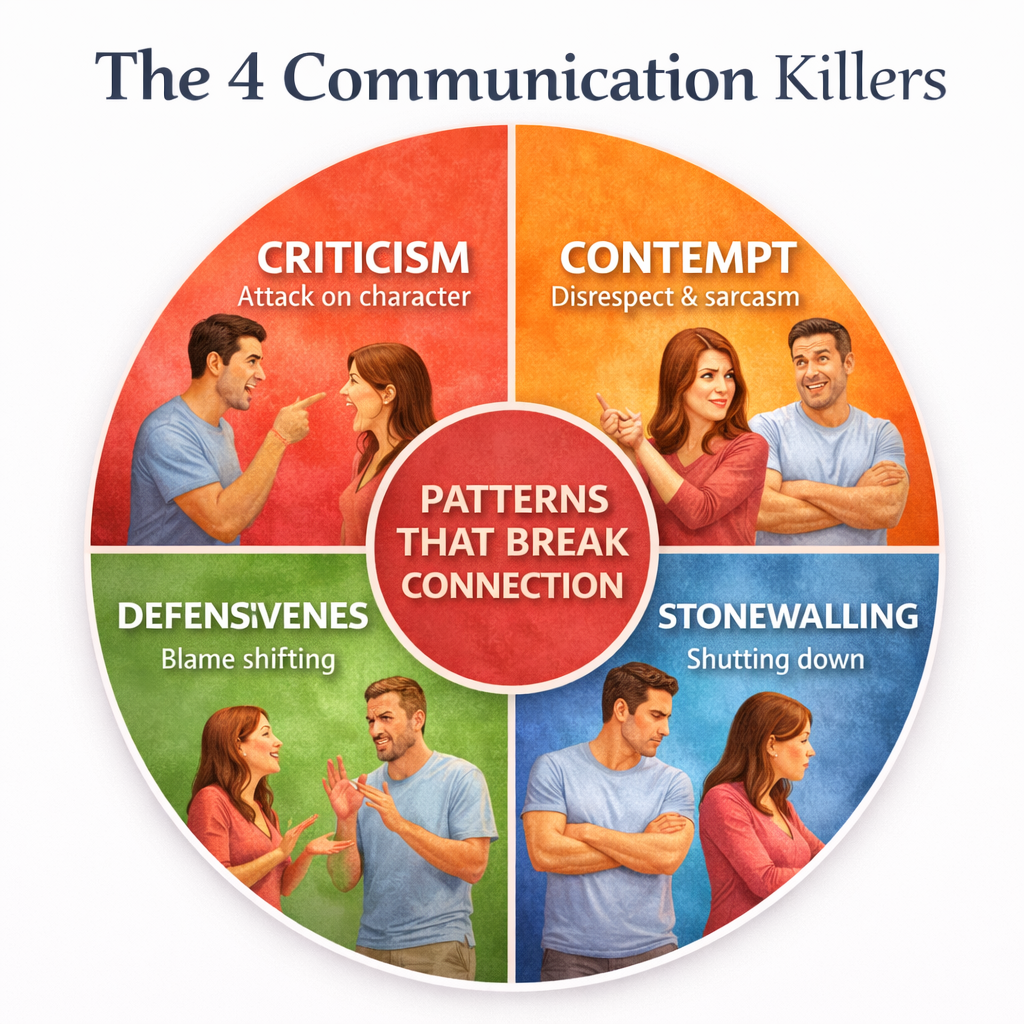
The “Four Horsemen” are often described in communication habits that can show a relationship breakdown. These aren’t just mistakes that happen here or there or bad moods, but they’re something that frequently happens that reshapes how partners see and respond to each other. This can create a cycle that is hard to overcome without putting in effort and being more aware.
When this shows up, couples stop feeling like a team and feel more like opponents. The conversations become like battlegrounds instead of places of understanding. Even small talks about responsibilities, plans, or even daily life can escalate fast because of the tension that is already there.
The good news for these situations is that they’re not permanent. Once couples start to recognize these things, they can replace them with better and healthier habits. The change doesn’t require the couples to be perfect, but it requires consistency, willingness, and self-awareness from both partners to look at conflicts in a different way.
Criticism and Personal Attacks
Even good relationships have complaints. This is a normal thing, and expressing needs and concerns is important to have a healthy relationship. The problem is when the complaints turn into personal attacks that target one or the other partner’s character instead of addressing the behavior.
Criticism focuses more on who your partner is instead of what happened. This can include exaggerations that use the words “you never” or “you always,” which can make your partner feel misunderstood, labeled unfairly, or even judged. Here are some examples:
- “I felt stressed because you didn’t call.” This conversation invites clarity and discussion.
- “You’re selfish and never think of anyone but yourself.” This conversation creates distance and defensiveness.
Even though the differences in these two conversations might seem small, they completely change how the message is received by the partner. One is an open door for communication, while the other is a place of distance and defensiveness.
Emotional Environments
As time goes on, when couples experience repeated criticism, it creates an emotional environment where one or both partners feel that they are constantly being judged instead of supported. This can cause more sensitivity, and when there are just neutral comments, they can be interpreted as something negative.
This also changes the focus away from problem-solving and more towards defending their own identity. Instead of being able to work through an issue, this kind of conversation can become about protecting themselves from an attack from their partner.
Making Communication Better
To communicate better, you can focus on specific behaviors instead of your partner’s character. Don’t label your partner, but speak from your own experiences. Here is a helpful way to do this:
“I feel (this way) when (the situation) because (why you feel this way). What I need is a solution to the situation.”
This type of format can keep the conversation grounded in reality and help to stop it from escalating into something negative.
Contempt and Frustration
Contempt isn’t about being frustrated, but it’s more about disrespect. This is one of the most damaging communication patterns because it attacks a person’s sense of worth. This is what it looks like:
- Sarcastic humor when the conversation is serious.
- Dismissive facial expressions, such as eye-rolling.
- Talking down to your partner.
- Mocking their tone.
- Using belittling language.
Even when contempt is disguised with humor, it carries an underlying message of superiority.
This kind of behavior sends a message that you’re telling your partner you’re better than they are. When partners hear this message repeated over and over again, it causes trust and emotional safety to leave.
The partner that is always on the receiving end might feel disrespected, emotionally unsafe, or unvalued. As time goes on, this can cause the partner to have resentment, withdrawal, or a breakdown in their emotional intimacy.
One of the reasons that contempt is so dangerous is that it starts slowly from an unresolved issue, like a small frustration that isn’t addressed, and then it can build and come out as hostility or bitterness over time.
Improving Contempt
In order to improve content, it needs to be replaced with curiosity and respect. Even when there’s an argument or disagreement, having basic respect is important. You can shift from judgment to understanding by:
- Asking questions instead of assuming.
- Express appreciation regularly.
- Address the issues before resentment builds.
Defensiveness and Hurting the Connection
Defensiveness often shows up when someone feels misunderstood, attacked, or blamed. This is a natural reaction, but it is also a reaction that can prevent a meaningful resolution. This is what defensiveness looks like:
- Making excuses instead of listening to the problem.
- Denying responsibility.
- Blaming your partner.
- Justifying your actions without admitting how they impacted others.
For example, saying, “I was too busy, why didn’t you do it instead?” Taking responsibility, even some, can change the tone of the whole conversation.
Changing your mindset means that you understand that this doesn’t mean that you’re “losing,” but it means that you want to make the relationship stronger.
Stonewalling and Shutting Down
Stonewalling is when someone withdraws from the conversation and the interaction completely. Instead of talking, they disconnect physically and emotionally. This is what it looks like:
- Silence during conflict.
- Avoiding eye contact.
- Turning away.
- Leaving without explaining why.
- Acting disengaged.
- Acting uninterested.
This kind of behavior shows signs of emotional overwhelm instead of indifference.
Why Stonewalling is Harmful
Stonewalling can feel like abandonment or rejection to the partner who is on the receiving end. This can create emotional distance and stop the issues from being resolved.
As time goes on, this kind of pattern can make communication feel impossible because one partner might feel that they are always the one who is talking or that they are talking to a wall instead of their partner.
Improving Stonewalling
To improve stone walling, instead of shutting down, take a break. Here’s what you can say:
- “I need a few minutes to calm down, and then we can talk about this in a proper and calm way.”
By responding like this, it keeps the connection going and allows both partners to get their emotions in control before they continue the conversation.
Creating a Negative Cycle
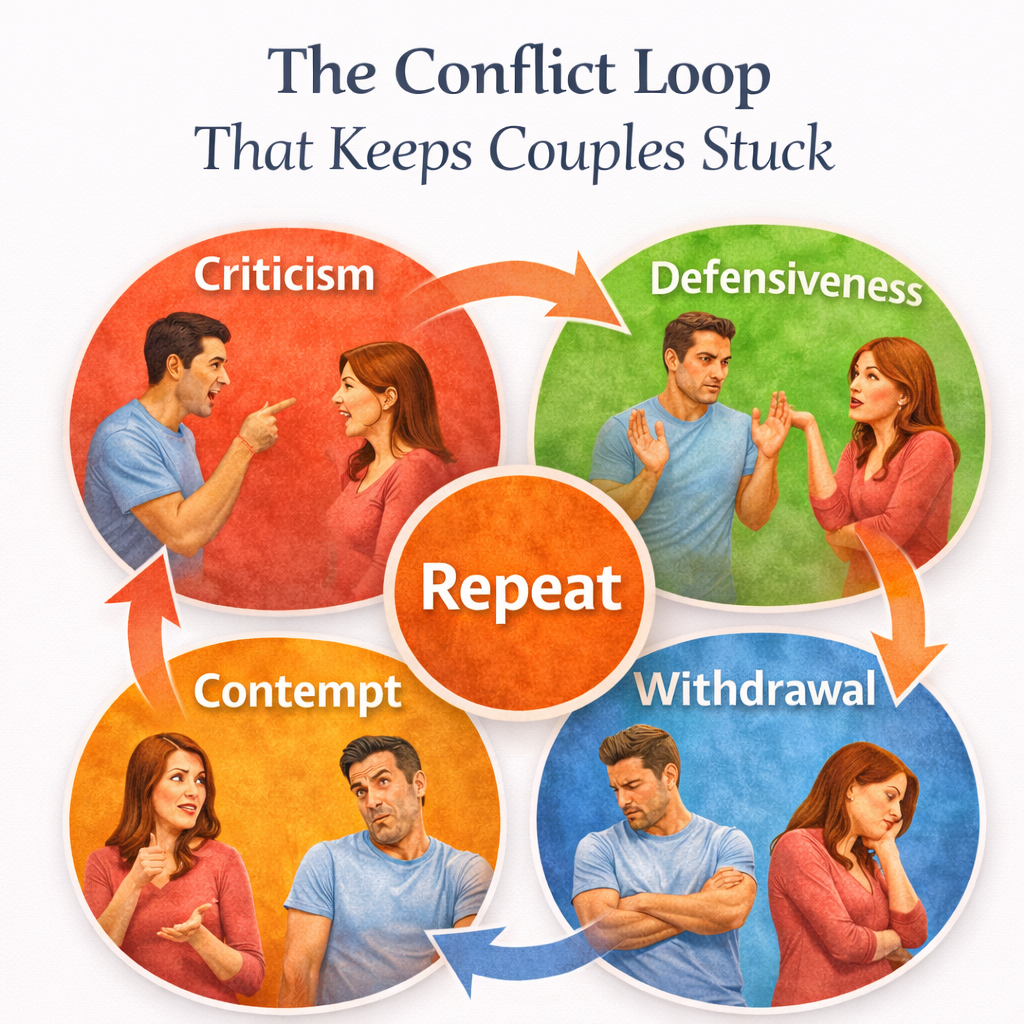
These four different behaviors aren’t there in isolation, but they’re feeding into each other constantly. This creates a pattern that is harder to break as time goes on. Here’s what the cycle looks like:
- Criticism causes defensiveness.
- Ongoing negativity causes contempt.
- Emotional overwhelm creates stonewalling.
As the cycle repeats over and over again, communication is more reactive and less calm and intentional. Even small miscommunications can turn into larger conflicts because the patterns are already in motion.
In order to break this cycle, both partners need to have patience, awareness, and be willing to respond differently, even when it’s hard.
Having Healthy Conflict
Healthy conflict doesn’t mean that you avoid having disagreements, but it’s about handling them in a way that’s understanding instead of damaging. Here are some traits of healthy conflict:
- Focus on the issue.
- No personal attacks.
- Make a space for both points of view.
- Express emotions without disrespect.
- Share responsibility to come up with a solution.
- Be willing to repair and connect.
Healthy conflict is calm, focused, and solution-oriented, even when there are strong emotions.
How to Know Your Communication is Changing
There are some couples that don’t notice unhealthy patterns right away, and these usually develop slowly. Here are some signs that your communication is changing to something negative:
- Feeling tense before the conversation starts.
- Assuming negative intent right away.
- Interrupting your partner instead of listening.
- Replaying the argument over and over.
- Keeping a score of past mistakes.
If you can start recognizing these signs early, it allows you to correct the course before the patterns become too strong.
Emotional Overload
Communication problems aren’t always about relationship dynamics but more about emotional capacity.
When you have a lack of sleep, burnout, external pressures, or stress, it can slow down your ability to be calm and present when talking to your partner. When your nervous system becomes overwhelmed, you will react more impulsively or shut down when talking to your partner. This is what can help:
- Take a break before you respond.
- Take deep and slow breaths.
- Go back to the conversation once you clear your mind.
- Pause and don’t react immediately.
When you learn to regulate your emotional state, it can help improve how you communicate with your partner and with other people.
Repairing Conflict
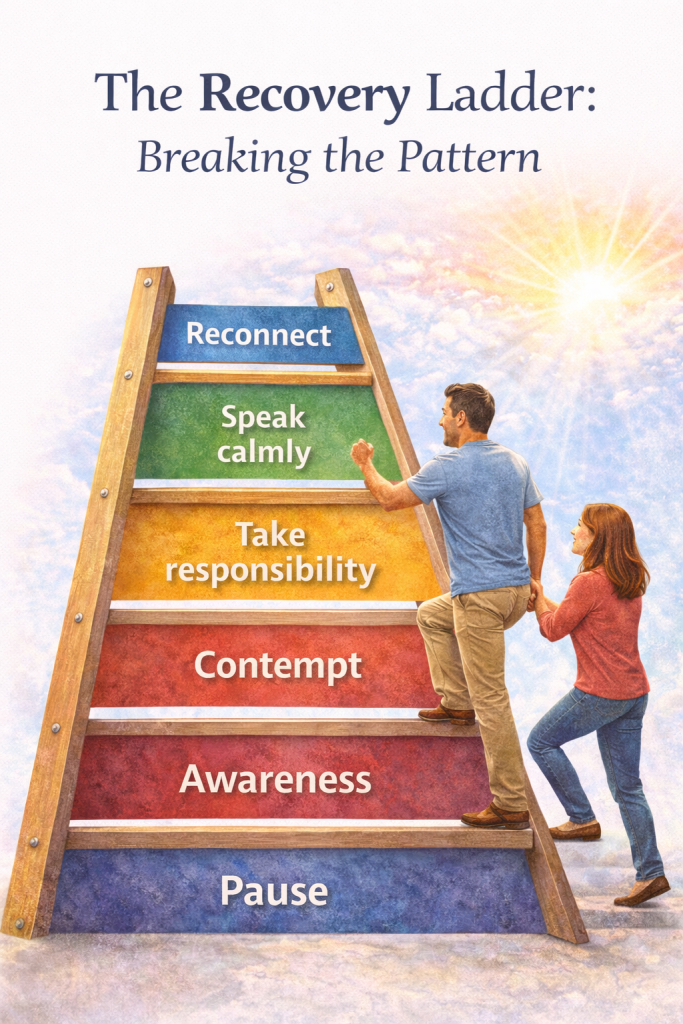
All relationships go through some type of conflict, and what matters the most is how couples repair this conflict afterward. Here are some small repair actions that you can do to help rebuild trust and stop emotional distance:
- Apologize sincerely.
- Acknowledge what your partner is feeling.
- Check in with your partner after a disagreement.
- Ask what your partner needs.
- Reaffirm your connection and your love.
When You Need Outside Support
If you see frequent patterns recurring or it’s hard to change the relationship, outside support can help. You should consider getting support when:
- There’s constant contempt.
- The conversations escalate on a regular basis.
- One or both of the partners shut down.
- Conflicts are unresolved.
Getting couples coaching or counseling can give structure, tools, and a different perspective on the situation to help rebuild communication.
Final Thoughts: All Relationships Go Through Conflict
All relationships go through conflict, but what matters isn’t if conflict is there, but how it’s handled in the end.
Contempt, criticism, stonewalling, defensiveness, and more can start breaking away even strong connections. By being aware, putting in effort, and intentionally changing, these patterns can be replaced with healthy ways of communicating with one another.
The goal isn’t to have a perfect relationship, but it’s to understand and grow together.
Frequently Asked Questions
1. What are the four communication patterns that break relationships?
The four communication patterns are criticism, contempt, defensiveness, and stonewalling. When these habits become repeated ways of interacting, they can slowly damage trust, closeness, and emotional safety.
2. What is criticism in a relationship?
Criticism is when a complaint turns into a personal attack. Instead of focusing on a specific behavior or situation, it targets your partner’s character and often uses phrases like “you always” or “you never.”
3. Why is criticism so harmful to couples?
Criticism makes a partner feel judged, misunderstood, and unfairly labeled. Over time, it can shift communication away from problem-solving and into self-protection, tension, and defensiveness.
4. What is contempt in relationship communication?
Contempt is communication that shows disrespect, superiority, or disgust. It can appear through sarcasm, eye-rolling, mockery, belittling language, or talking down to your partner.
5. Why is contempt considered one of the most damaging patterns?
Contempt attacks a person’s sense of worth. It sends the message that one partner sees themselves as better than the other, which can quickly destroy emotional safety, trust, and intimacy.
6. What does defensiveness look like in an argument?
Defensiveness often shows up as excuses, blame shifting, denying responsibility, or justifying actions without acknowledging their impact. It usually happens when someone feels attacked or misunderstood.
7. How does defensiveness make conflict worse?
Defensiveness blocks meaningful resolution because it keeps the focus on self-protection instead of understanding the issue. Rather than calming the conflict, it often increases frustration on both sides.
8. What is stonewalling in a relationship?
Stonewalling happens when someone withdraws from the interaction completely. It may look like silence, avoiding eye contact, turning away, leaving the conversation, or acting emotionally shut down.
9. Why does stonewalling hurt a relationship?
Stonewalling can feel like abandonment or rejection to the partner on the receiving end. It creates emotional distance and makes it much harder to resolve the actual problem.
10. Are these communication patterns always obvious?
No. These patterns often develop slowly. Couples may not notice them right away because they can begin as small habits that gradually become normal during stress or repeated conflict.
11. Can criticism, contempt, defensiveness, and stonewalling feed into each other?
Yes. These patterns often create a cycle. Criticism can trigger defensiveness, ongoing negativity can lead to contempt, and emotional overwhelm can result in stonewalling or withdrawal.
12. What is a healthier alternative to criticism?
A healthier alternative is to focus on the specific behavior instead of attacking your partner’s character. Speaking from your own experience with “I feel” statements can help keep the conversation grounded and more constructive.
13. How can couples replace contempt with something healthier?
Couples can replace contempt with respect, curiosity, and appreciation. Asking questions, avoiding assumptions, and addressing small frustrations early can help stop resentment from growing.
14. What is the best way to respond instead of becoming defensive?
Instead of defending yourself immediately, try listening first and taking at least some responsibility. Acknowledging your partner’s experience can completely change the tone of the conversation.
15. What should someone do instead of stonewalling?
Taking a short break is usually healthier than shutting down. The key is to communicate that you need time to calm down and then return to the conversation in a more regulated way.
16. What does healthy conflict look like in a relationship?
Healthy conflict focuses on the issue instead of personal attacks. It allows room for both perspectives, expresses emotion without disrespect, and aims toward repair, understanding, and a shared solution.
17. Can stress and emotional overload make communication worse?
Yes. Lack of sleep, burnout, pressure, and emotional overload can reduce your ability to stay calm and present. When people feel overwhelmed, they are more likely to react impulsively or shut down.
18. How can couples tell when their communication is becoming unhealthy?
Warning signs can include feeling tense before conversations begin, assuming negative intent, interrupting, replaying arguments repeatedly, or keeping score of each other’s past mistakes.
19. How do couples repair conflict after a damaging argument?
Repair often starts with a sincere apology, acknowledging your partner’s feelings, checking in after the disagreement, asking what they need, and reaffirming the relationship.
20. When should a couple seek outside support for communication problems?
Outside support may help when contempt is frequent, arguments escalate regularly, one or both partners shut down often, or conflicts stay unresolved for long periods. Couples counseling or coaching can provide tools and structure for change.