
Updated
Emotional abuse involves behaviour that intimidates, humiliates, isolates or controls another person. It can occur without physical violence. Feeling frightened, confused or worn down deserves attention, but a single feeling cannot diagnose a relationship. Look at what is happening, its effect on your freedom and safety, and whether you can disagree without fear.
Notice behaviour as well as feelings
The U.S. Office on Women’s Health guide to emotional and verbal abuse identifies behaviours such as demanding passwords, preventing contact with family, controlling money, humiliation and threats. These examples matter because they describe actions, rather than asking you to decide whether someone is secretly a bad person.
- Control over ordinary choices
- A partner demands constant updates, decides whom you may see, restricts access to money or interferes with work, study or medical care. Concern for your wellbeing does not justify taking away your choices.
- Humiliation and intimidation
- Insults, frightening outbursts or threats are used to make you comply. A threat to you, a child, another person or a pet warrants attention even if no physical injury has happened.
- Undermining your account of events
- Repeated denial or distortion can leave you doubting your memory and relying on the other person’s version. Gaslighting describes a pattern of control; an ordinary disagreement about a detail does not establish it by itself.
- Isolation and punishment
- Contact with friends or family is discouraged or made costly through accusations, threats or retaliation. Taking an agreed break to calm down is different from using silence or withdrawal to punish and control.
These descriptions are prompts for reflection, not a scoring test. You do not need to collect a certain number of signs before contacting a support service. A serious incident or fear for your safety is enough reason to ask for help.
There is no single way a person must feel
You may feel anxious, numb, ashamed, angry, attached to the person or uncertain about what happened. You might find yourself planning ordinary conversations around avoiding their reaction. The Office on Women’s Health describes fear, self-doubt, guilt and feeling controlled among possible effects.
Some people feel distressed immediately; others recognize a pattern later. Still loving someone, remembering good times or not being ready to leave does not make their harmful behaviour your responsibility. Equally, feeling exhausted alone does not tell you the cause. A health professional can assess symptoms that are affecting sleep, mood or daily functioning.
Put safety before a confrontation
Generic instructions to “set a boundary” or “cut off contact” can miss important risks. The Office on Women’s Health explains that leaving an abusive relationship can require an individual safety plan, and danger can increase around separation. You do not have to announce a decision or persuade the other person that the word abuse applies.
An advocate can help you consider a safe way to communicate, people you trust, somewhere to go in an emergency, and practical needs such as children, transport, documents or medication. The appropriate plan depends on your circumstances. Avoid storing notes or plans where the person could find them if that would put you at risk.
You can ask for support while remaining undecided about the relationship. A first conversation can simply describe an incident and ask what options are available. You do not need a polished explanation, a prediction about the future or permission from the other person.
Choose help with a clear role
A domestic-abuse advocate can discuss safety and local resources. A qualified mental-health professional can help assess and address emotional or health effects. A trusted person may help with a ride, an appointment or a place to talk. These forms of help can work together.
Our guide to choosing between clinical support and a psychic reading explains the different roles. A reading cannot verify another person’s intentions, certify that a relationship is safe or replace abuse support. Claims about karma, destiny or a special bond do not create an obligation to tolerate harm.
If someone confides in you
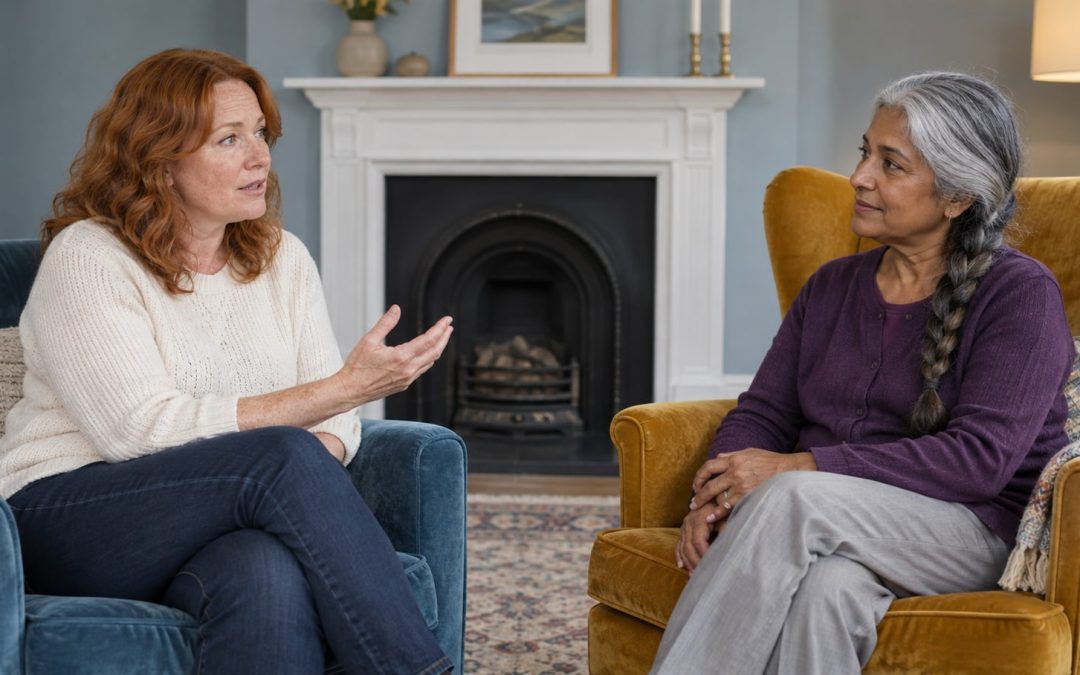
The Office on Women’s Health recommends listening, offering specific help and avoiding shame or pressure to leave. Ask what would be useful and whether it is safe to contact them. Support should leave room for their decisions.
An example of practical support: “I believe that this has been frightening. You do not deserve to be treated that way. Would you like me to listen, help you contact a service, or help with something practical?”
Do not confront the other person on their behalf or share the disclosure without considering the person’s safety. If immediate danger is present, seek emergency help. For ongoing support, be dependable without requiring the person to follow your timetable.
Recovery does not require proving your worth
Regaining confidence can involve ordinary choices, dependable relationships and professional care when needed. It does not require constant positivity, a particular spiritual practice or forgiveness. The responsibility for abusive behaviour belongs to the person choosing it; support is available while you work out what comes next.