

One of the biggest mistakes that women make in dating is confusing attraction with compatibility. A man you are dating might feel intense, exciting, attractive, desirable, and charismatic, but those things don’t mean that he is someone who is healthy, available, or aligned with what you want in a relationship.
This is why there are so many women who get hurt when dating. They might feel the chemistry and then decide to invest fast, and before they really know if the relationship is healthy for them or not, they imagine a future with them and get emotionally attached.
This can cause people to be trapped in dating cycles because they put chemistry over compatibility and intensity over safety. Instead of focusing on reality, they fantasize about what they want. This can result in things like:
- Heartbreak.
- Confusion.
- Anxious attachment.
- Emotionally unavailable relationships.
- Staying too long with the wrong person.
Learning how to recognize the right man means that you have to slow down enough to look at your relationship clearly, instead of getting distracted by emotional highs.
Why Women Chase the Wrong Men
One of the biggest dating traps is thinking that if the chemistry feels strong, then the connection is right. Strong attraction doesn’t always mean compatibility, but it can mean:
- Unpredictability.
- Attachment wounds.
- Nervous system activation.
- Inconsistency.
- Familiar patterns in your relationships.
According to Verywell Mind on Attachment Styles, psychology shows that inconsistent relationships can create a stronger emotional obsession because uncertainty activates anxiety and hyperfocus.
This is why emotionally unavailable people can feel a strong attraction because emotional uncertainty creates psychological activation. But emotional activation isn’t the same thing as emotional safety.
Chemistry Can Be Confusing
Some women think that butterflies, nervousness, obsession, and intensity are love. But healthy love feels different, and a healthy connection will feel:
- Grounding.
- Safe.
- Balanced.
- Calm.
- Consistent.
Real love shouldn’t feel:
- Chaotic.
- Confusing.
- Destabilizing.
- Uncertain.
This doesn’t mean that healthy relationships should be boring, but that they should be safe enough for intimacy to grow slowly and steadily instead of through anxiety and unpredictability.
Why You Should Evaluate Before Investing
One of the best things women can do is to go from, “How do I get them to choose me?” to, “Is this man emotionally healthy enough to align with what I need?” This kind of mindset can change everything.
Instead of attaching fast, you look for consistency, communication, values, integrity, availability, maturity, and relationship readiness. This can protect your emotions. Without evaluation of the relationship, attraction can cause you to self-abandon yourself.
Qualifying a Man
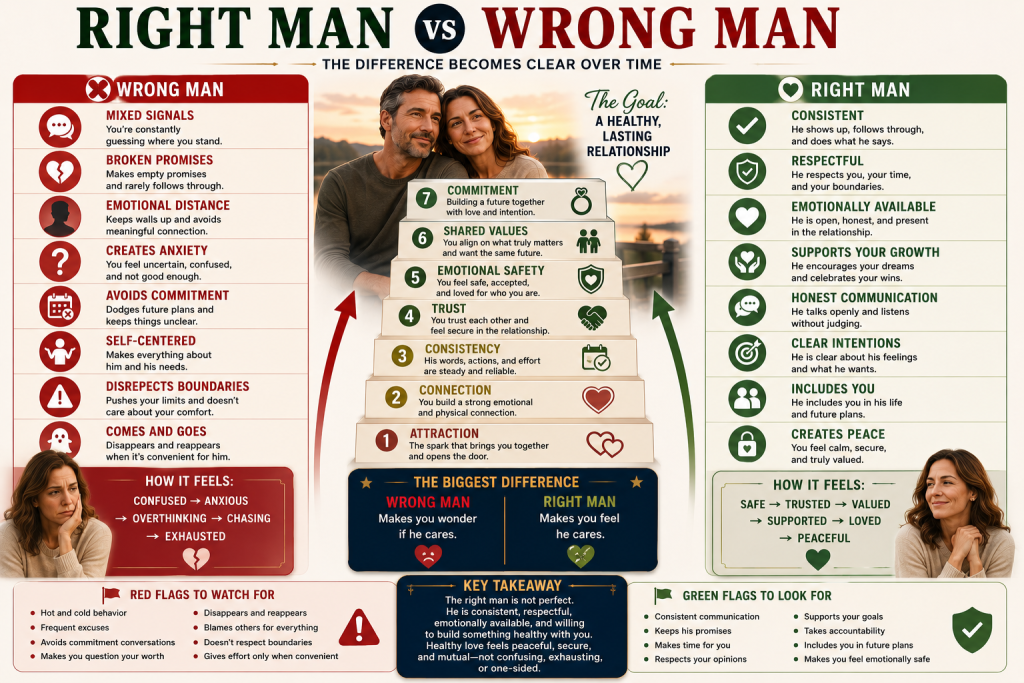
Qualifying a man can mean that you take time to evaluate if the man aligns with your needs, goals, communication style, values, long-term vision, or emotional capacity. Before you invest heavily, you need to know what the relationship holds.
This doesn’t mean that you interrogate someone or that you become cynical, but it means dating consciously instead of being impulsive. Healthy dating needs to have curiosity before commitment.
Why A Lot of Women Attach Before Fully Evaluating Someone
A lot of women unintentionally become emotionally invested too quickly because:
- Chemistry feels exciting.
- Emotional attention feels validating.
- Attraction creates fantasy.
- Loneliness can intensify attachment.
- Uncertainty increases emotional focus.
Once emotional attachment starts building, people often begin:
- Ignoring red flags.
- Rationalizing inconsistency.
- Tolerating poor communication.
- Abandoning standards.
- Emotionally over-giving.
That’s one reason slowing down emotionally matters so much while dating. You need enough time to observe patterns instead of only reacting to emotionally exciting times.
Signs You Might Be Attaching Too Quickly
You might be emotionally investing too fast if:
- You imagine a future after only a few dates.
- Your mood depends heavily on their texts.
- You ignore obvious incompatibilities.
- You become emotionally anxious quickly.
- You emotionally prioritize them too early.
- You chase reassurance constantly.
- You stop evaluating the relationship clearly.
These patterns don’t mean that you’re “too emotional,” but they mean that your emotional investment moved faster than the reality of the relationship.
What the Right Relationship Usually Feels Like
A lot of women are surprised to realize that healthy relationships often feel calmer than unhealthy ones. The right man usually creates things like:
- Emotional consistency.
- Emotional safety.
- Emotional clarity.
- Reliability.
- Trust.
- Emotional reciprocity.
- Peace.
You usually aren’t:
- Decoding mixed signals constantly.
- Wondering where you stand every day.
- Obsessing over communication.
- Feeling emotionally unstable all the time.
Healthy love still includes vulnerability sometimes, but it shouldn’t feel like constant chaos.
Questions To Ask Yourself After Dates
1. What Version of Myself Did This Person Bring Out?
Did you feel:
- Relaxed?
- Authentic?
- Emotionally guarded?
- Confident?
- Anxious?
- Emotionally small?
The right relationship usually helps you feel more emotionally authentic instead of less like yourself.
2. How Did My Body Feel Around Him?
Your nervous system often notices emotional safety before your logical mind fully does. Did you feel:
- Calm?
- Emotionally safe?
- Tense?
- Hypervigilant?
- Emotionally drained?
- Grounded?
A lot of people mistake emotional activation for compatibility, but anxiety isn’t always a sign of connection.
3. Did I Feel Truly Heard?
A lot of people confuse attention with emotional intimacy, but emotional intimacy usually involves feeling:
- Understood.
- Listened to.
- Emotionally respected.
- Emotionally acknowledged.
Did he genuinely engage with your emotions and thoughts, or did most conversations revolve around him?
4. Did I Feel Energized or Emotionally Drained?
A healthy emotional connection often leaves people feeling:
- Lighter emotionally.
- Energized.
- Calm.
- Emotionally fulfilled.
Emotionally unhealthy dynamics often leave people feeling:
- Confused.
- Emotionally exhausted.
- Hyper-focused on reassurance.
- Anxious.
Pay attention to how your emotional state feels after interactions. That usually shows a lot.
5. Was I Attracted to His Character or Only the Chemistry?
Chemistry matters, but character can determine if the relationship will become emotionally healthy in the long term. Ask yourself things like:
- Is he emotionally mature?
- Is he consistent?
- Does he communicate clearly?
- Does he follow through?
- Does he show integrity?
Chemistry without character often leads to heartbreak eventually.
6. Did I Feel Emotionally Safe Enough to Be Myself?
One of the biggest signs of a healthy relationship is emotional safety. You don’t constantly feel:
- Judged.
- Pressured.
- Emotionally confused.
- Afraid to express needs.
- Afraid of losing them constantly.
You feel emotionally accepted for who you are.
7. Am I Seeing Reality or Fantasy?
A lot of women emotionally attach to these things instead of looking at observable behavior:
- Potential.
- Fantasy.
- Imagined future connection.
- Projection.
One healthy question to ask yourself is, “What has he consistently shown me through actions?” instead of asking, “What do I hope he becomes?”
Why Emotional Consistency Matters So Much
Research consistently shows that consistency is one of the strongest predictors of emotional security and healthy bonding in relationships.
Consistency creates:
- Trust.
- Emotional safety.
- Security.
- Emotional regulation.
- Intimacy.
Inconsistent relationships often create obsession because unpredictability activates emotional anxiety, and anxiety isn’t love.
Signs the Relationship Is Emotionally Healthy
The right man usually:
- Communicates consistently.
- Follows through.
- Respects your boundaries.
- Makes an effort.
- Creates emotional clarity.
- Shows emotional maturity.
- Emotionally invests reciprocally.
- Allows conflict without emotional punishment.
- Values your emotional well-being.
Healthy relationships usually feel emotionally mutual instead of emotionally one-sided.
Why A Lot of Women Ignore Red Flags
Once emotional attachment develops, a lot of women start prioritizing emotional hope over reality.
They may rationalize things like this because emotionally losing the fantasy can feel painful:
- Inconsistency.
- Emotional unavailability.
- Mixed signals.
- Lack of effort.
- Unclear intentions.
That’s one reason slowing down emotionally is one of the healthiest things you can do while dating.
Practical Ways to Date More Intentionally
Here are some ways to date intentionally:
Slow Down Emotional Fantasy
Avoid projecting future commitment emotionally too quickly.
Stay connected to the present instead of emotionally rushing ahead.
Watch Actions More Than Words
Anyone can create chemistry temporarily. Consistency usually shows emotional character much more clearly.
Don’t emotionally center your life around someone new immediately. Keep things like:
- Friendships.
- Goals.
- Hobbies.
- Routines.
- Emotional independence.
Stay Curious Instead of Emotionally Consumed
Healthy dating usually feels exploratory instead of obsessive.
Let Time Show Character
Real emotional compatibility becomes visible as time goes on, not only through early chemistry.
Final Thoughts: Meeting the Right Person Isn’t Always About Chemistry
Knowing when you meet the right person shouldn’t be about chemistry but about emotional alignment. The right relationship should feel safe, grounded, consistent, and healthy, and not chaotic or full of uncertainty.
The healthiest dating change that you can make is to stop chasing intensity and to start looking at compatibility instead. The right person isn’t about someone who always makes you feel butterflies, but someone whose actions, availability, consistency, and character give you a relationship where you feel safe being yourself.
Frequently Asked Questions
1. How do you know when you meet the right man?
You may know you have met the right man when his actions are consistent, his intentions are clear, and the relationship feels peaceful, respectful, and emotionally safe instead of confusing or one-sided.
2. What are the biggest signs of the right man?
The biggest signs include consistency, honesty, respect, emotional availability, shared values, accountability, and a genuine desire to build a healthy relationship with you.
3. Does the right man make you feel calm?
Yes. While every relationship has challenges, the right man usually brings more peace than anxiety. You feel secure because his words and actions match over time.
4. How is the right man different from the wrong man?
The right man is consistent, respectful, honest, and emotionally present. The wrong man often gives mixed signals, avoids accountability, pushes boundaries, or keeps you guessing about where you stand.
5. Can the right man still have flaws?
Yes. The right man does not have to be perfect. What matters is that he is willing to communicate, grow, take responsibility, and treat you with respect.
6. What does consistency look like in the right man?
Consistency means he follows through, communicates reliably, keeps his promises, and shows care through repeated actions rather than only saying the right words.
7. Why is emotional safety important?
Emotional safety means you can be honest, vulnerable, and real without fearing judgment, dismissal, or emotional punishment. It is one of the strongest signs of a healthy connection.
8. How do you know if his intentions are serious?
His intentions may be serious if he makes time for you, includes you in his life, talks openly about the future, respects your needs, and shows steady effort without being pushed.
9. What green flags should I look for?
Green flags include honest communication, emotional maturity, kindness, respect for boundaries, accountability, reliability, shared values, and a willingness to solve problems together.
10. What red flags mean he may be the wrong man?
Red flags include hot and cold behavior, broken promises, emotional distance, disrespect, controlling behavior, avoidance of commitment, and making you feel anxious or not good enough.
11. Is chemistry enough to know he is right for you?
No. Chemistry can create attraction, but it does not prove compatibility. The right man should also show respect, consistency, emotional availability, and shared values.
12. How do shared values help identify the right man?
Shared values help you build a future in the same direction. When you agree on important things like trust, loyalty, family, lifestyle, and commitment, the relationship has a stronger foundation.
13. Should the right man support your goals?
Yes. The right man supports your growth and does not feel threatened by your dreams. He wants you to succeed as a whole person, not just as his partner.
14. What does healthy communication look like?
Healthy communication includes honesty, listening, patience, respect, and a willingness to discuss difficult topics without blame, avoidance, or emotional games.
15. How do you know if you are forcing the relationship?
You may be forcing the relationship if you are always initiating, always excusing his behavior, always waiting for clarity, or trying to convince him to value you.
16. Does the right man make effort without being asked?
Yes. The right man usually shows effort naturally because he values the relationship. He does not need constant reminders to communicate, make time, or treat you with care.
17. Can the right relationship still have conflict?
Yes. Even healthy relationships have disagreements. The difference is that both people try to repair, listen, understand each other, and solve problems respectfully.
18. How long does it take to know if he is the right man?
There is no exact timeline. Time reveals patterns, so it is better to watch his consistency, character, accountability, and emotional availability over weeks and months.
19. What if he says the right things but acts differently?
Pay attention to actions. If his words sound loving but his behavior creates confusion, insecurity, or disappointment, his actions may be showing you the truth more clearly.
20. What is the clearest sign he is the right man?
The clearest sign is that the relationship feels mutual. You are not chasing, guessing, or begging for care. Both people are choosing each other with respect, effort, and honesty.