
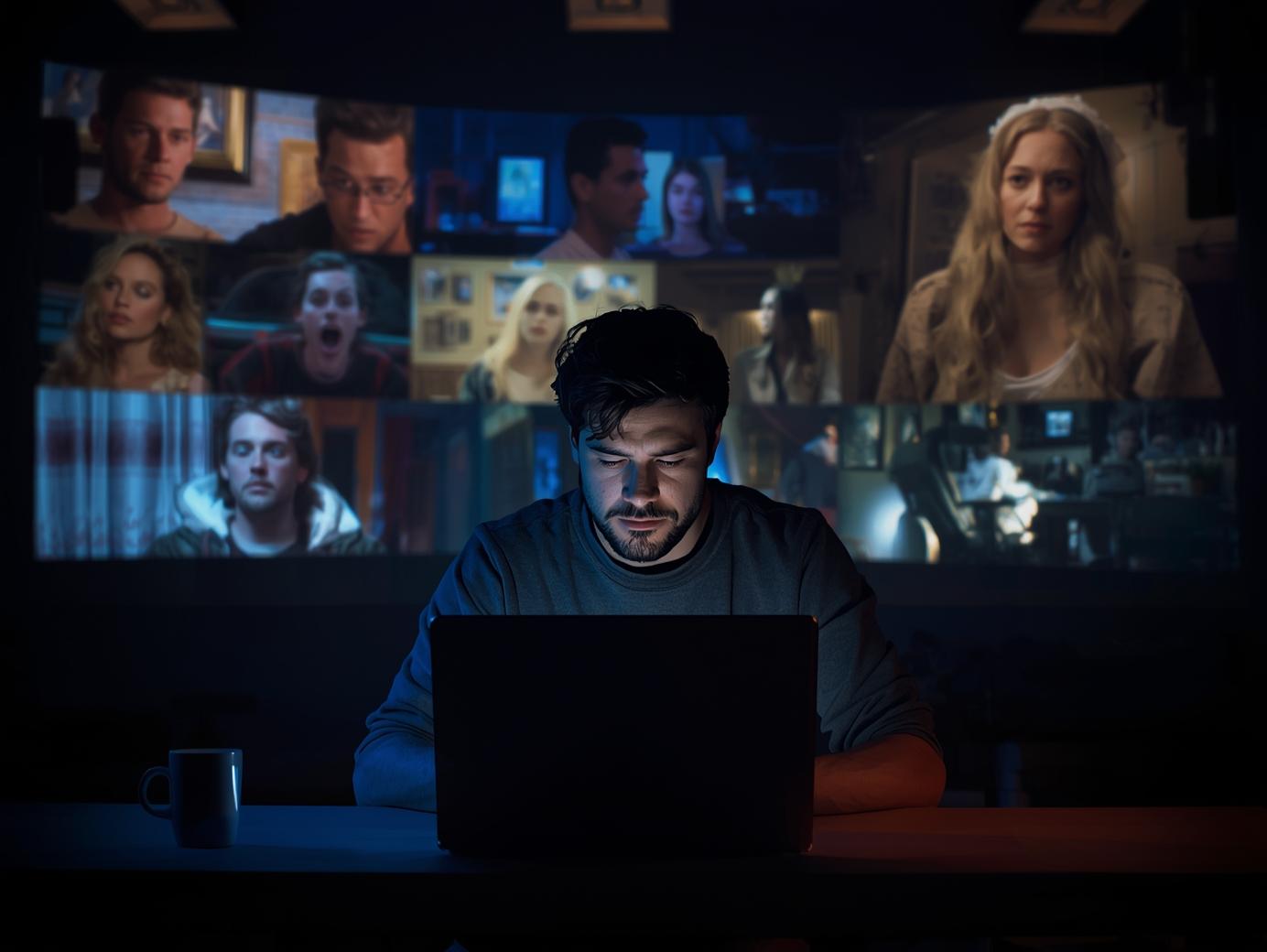
Dreams Tell Stories
Dreams have always told stories. They’re put into the plots of movies, into the shadow characters, and they show symbolic truth before the script ever says anything about them. In the last few years, screenwriters have relied more heavily on dreams and premonitions not to trick people or to add supernatural themes, but to use emotional intelligence as a tool to explore the characters’ inner world.
People today aren’t just watching stories play, but they are looking for meaning. As people become more interested in spirituality and things like self-reflection and intuition, dream sequences and visions feel more relatable to them. According to the Pew Research Center, there is a rise in spiritual identification and intuitive belief systems in the United States, especially for younger viewers. When people see a character who is dreaming a symbolic dream, they sense something before it ever happens, and this mirrors how people sometimes sense their own lives and emotions.
Psychologists have known about dreams as a gateway into the subconscious mind for years. According to the American Psychological Association, dreams help people to process things like identity conflict, stress, and memory. This is a great place for screenwriters not to have to rely on words but to drop in symbolic dreams that communicate what is happening that words would take too long to explain.
The dream can show a character that’s dreaming of a moment of danger or drowning, but knows that something bad is about to happen before it does. Or they might see a character that’s able to get a glimpse into the future that they don’t understand yet.
Modern movies allow these moments to not just be literal phenomena, prophecy, but to be emotional language, poetry, and psychological reflection that crowds love. The more screenwriters who use these types of tools, the more people who are able to interpret them through a lens of psychology and intuition.
When you blend emotional logic and intuition, it reshapes how dream premonitions happen in movies and why people keep going to see them.
Why Dreams Work on Screen
Dreams let writers break the rules. In movies, a dream can bend time, shift reality, and turn emotions into images without needing any explanation. But the real power of movie dreams comes from how strongly they connect to human psychology.
Dreams as Emotional Shortcuts
In real life, dreams take feelings we haven’t processed and turn them into symbols. Movies do the same thing. Instead of showing a character talking about their emotions, a dream shows those emotions in a quick, powerful way. Viewers may not know the details yet, but they feel the message instantly. Dreams communicate meaning without long dialogue. They feel natural because we experience the same thing in our own sleep.
The Brain and Symbolism
Harvard Medical School shows that dreams help us make sense of emotions and memories during sleep. That means the brain already thinks in symbols. Movies simply take that instinct and put it on screen.
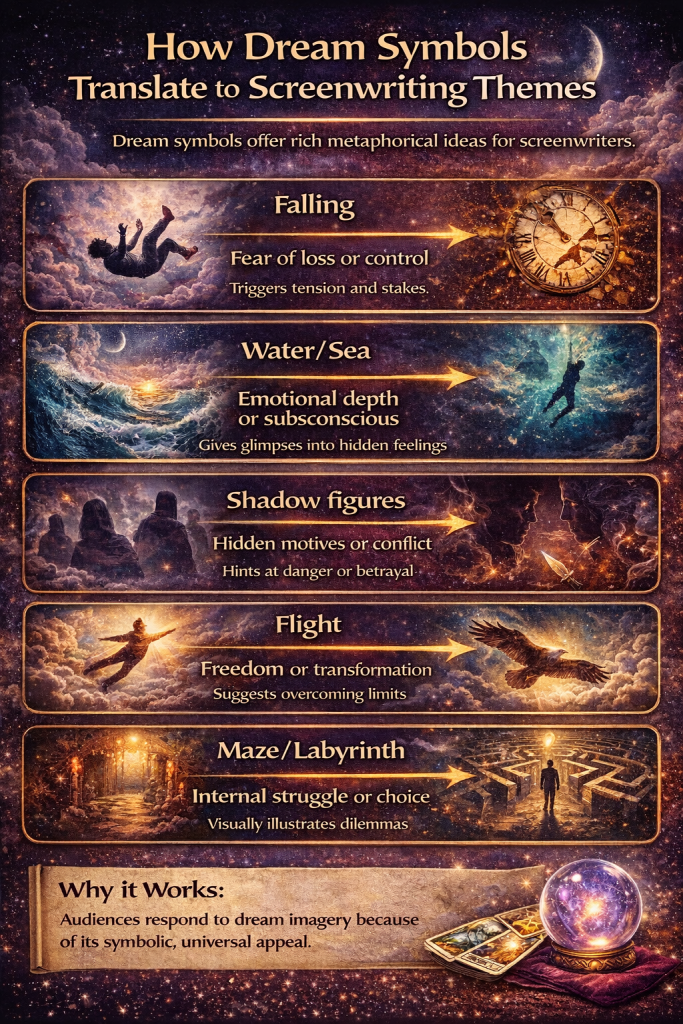
Some symbols are so common that almost everyone recognizes them without thinking about it:
- Falling represents losing control.
- Water represents strong feelings.
- Fire represents major change.
- Shadowy figures represent fear.
- Light represents clarity or truth.
People understand these connections automatically. Dream logic becomes a universal language that speaks to the heart, not the mind.
Premonitions as Tools
If dreams reveal what a character is holding inside, premonitions reveal what a character senses are coming. Modern intuitive scenes don’t try to prove psychic powers are real. Instead, they show how humans often feel a change before they fully understand it. The moment may be small, quick, or symbolic, but it works because it mirrors real emotions.
Why Premonition Scenes Are Popular
Premonitions raise the emotional stakes right away. They warn the viewer that something important is building, even if the character doesn’t know it yet. They make the audience curious. They create tension without spelling out every detail. And they leave a soft question in the air like “What does this mean?”
Writers also love premonitions because they can appear in creative ways. A character might see a sudden flash of a place they have never been. A sound might interrupt the scene for no reason. A symbolic object might appear briefly and then vanish. These details feel like emotional alerts rather than spoilers.
Dreams explore what characters feel. Premonitions explore what characters sense. Both help audiences connect more deeply to the story without needing any scientific explanation.
Psychological Basis
Screenwriting today uses premonitions that are based on emotional logic and not supernatural themes. There is a psychological explanation as to why these scenes feel believable to people, and the reason is intuition.
According to the Cleveland Clinic, they say that intuition comes from subconscious pattern recognition and emotional processing. When people have a gut feeling or sense insight out of nowhere, it is because their brain has picked up subtle cues before their conscious mind becomes aware of it.
Screenwriters use these premonitions as visuals, and they show what it feels like when:
- You know something, but you can’t explain why.
- You feel conflict before it happens.
- You know something is going to be lost, or something is changing.
- You feel drawn to a place or path you don’t understand.
Premonitions then become a metaphor to show heightened emotional sensitivity that feels almost like having a psychic gift.
How Premonitions Work As Emotional Mirrors
In many movies, premonitions aren’t warnings from the universe, but they’re reflections of what a character is feeling on the inside. When a hero sees something like a burning city, this moment is full of symbols that people often bury in fear. If a character sees someone crying in a vision, it might talk about the emotional distance that exists in that person’s relationship. When someone feels danger before it happens, it can show trauma that isn’t healed or even heightened awareness from a past experience. These flashes don’t happen to prove that the future is a fixed thing, but they show emotional truth in a character who is having a hard time facing the present.
Modern Writers That Blend Psychology and Mysticism
Storytelling today has moved away from dream sequences that are only included to serve the plot. Writers are now crafting scenes that feel psychological, symbolic, and lightly mystical at the same time. They aren’t trying to prove a character has magical abilities. They are trying to show what is happening beneath the surface of the character’s mind. It creates an experience where viewers are invited into the character’s feelings rather than just their actions.
Psychics and the Story
In a lot of modern films, intuition becomes a storytelling tool. Characters receive flashes of imagery, sudden emotional impressions, or symbolic warnings that seem to hint at what is coming. These scenes feel almost psychic, even if nothing supernatural is stated outright. They allow characters to feel tension before a crisis, notice an emotional shift before it is spoken out loud, or sense they are walking toward a major turning point. The structure doesn’t rely on explaining any special ability. Instead, it lets imagery act as intuition does in real life, like being subtle, quiet, and emotionally charged.
Literal Sense and Emotional Logic
Dreams and visions in modern movies don’t have to make some kind of literal sense, but they just follow feelings and logic. There might be a door that opens to water that shows that the character feels that they are drowning and overwhelmed. A reflection might show inner doubt. A hard environment that blooms flowers out of nowhere can mean hope. These are different expressions that help the viewer to feel whatever the character is feeling. Emotions can become visual poetry, and this is why the symbols help people to explore fear, love, grief, anxiety, and transformation without even talking.
Using Mysticism in Storytelling
Instead of announcing spiritual gifts, movies often let the intuition unfold naturally. Characters might feel pulled towards a certain place without knowing why, or they might see danger before it happens. This works because it mirrors how people talk about intuition in their real lives. It shows instinct without forcing the movie to be a fantasy. Younger audiences especially respond well to this style, as more people feel comfortable talking about energy, spirituality, and inner knowing without needing to commit to a belief system. As culture shifts, writers reflect that shift on screen.
Using Mysticism Without Making It Sound Fake
The power of this filmmaking style is that it does not ask viewers to believe in premonition as a literal power. Instead, it asks them to emotionally recognize that sometimes a person feels where their story is going long before they can explain it. Viewers understand the symbolism even if they do not analyze it directly. The scenes resonate because many people experience something similar: a dream that feels like a message, a gut feeling that won’t go away, or a moment when the heart seems to know before the mind catches up. Modern films take those real, familiar feelings and allow them to shape the story.
Real-Life Examples in Movies
Premonitions and dreams are popular in today’s movies and shows. They show in dramas, psychological thrillers, and major box office hits. The most interesting examples blend symbolism and emotions instead of just relying on the future for predictions. These scenes work because they show the inner life of characters in ways dialogue alone never could.
“Everything Everywhere All at Once”
This multiverse story uses fast cuts, nonlinear scenes, and surreal jumps to explore Evelyn’s emotional overload. Each leap into an alternate reality feels like a dream—a symbolic expression of her fears, her unfulfilled dreams, and the many versions of herself she never had the chance to become. The imagery isn’t there to forecast what will happen. Instead, it visualizes what it feels like to be crushed under expectations while trying desperately to hold a family together. The multiverse becomes a metaphor for the internal chaos of a woman who believes she must become everything at once.
“Stranger Things”
Eleven’s abilities create scenes that look psychic, but the imagery is tied to her trauma and emotional sensitivity. When she visualizes the danger that is happening, this feels like a memory and fear coming together in real time. It shows that she is hyper-aware and that it’s part of her instincts and scars that happened when she was abused as a child. Her visions let people understand her intuition and fear before she ever talks. This is a supernatural element that works with the emotion and human foundation, which is a girl who learned to feel threatened before she can even name what it is.
“Dune”
In the world of Dune, Paul Atreides is never shown a single unchangeable fate. Instead, his visions unravel like psychological crossroads. He sees futures shaped by violence, and he sees Chani repeatedly and not just as a romantic interest, but as someone who represents grounding, humanity, and emotional truth. The harsh desert imagery reflects both destiny and the emotional cost of becoming a leader. His visions constantly shift because they are driven by internal conflict. They reveal the consequences of ambition and the fear of losing oneself to power.
“Barbie”
One of the most well-known moments of “Barbie” happened when she imagines death. This is a scene that is unsettling for her, but it shows her evolution. This is a moment that shows that she isn’t perfect, but that she is curious. This shows that there is more to her existence than being happy, and she wants depth. Barbie’s dream shows a story of someone who is questioning the meaning of their own life, and this is what the story is about.
Other Examples of Modern Movies
Other major productions also rely on dreams and vision sequences to unlock emotional stories. “Inception” builds entire worlds from a character’s guilt and grief, turning unprocessed emotion into literal architecture. “Moon Knight” portrays visions as the fractured inner life of someone shaped by trauma and identity confusion. “Atlanta” turns surreal, dreamlike moments into sharp reflections of cultural anxiety and self-perception.
Across all these films and shows, dream logic is used because it reveals what the characters are afraid to admit or unable to acknowledge. Rather than predicting what must happen, these visions expose the truth that is already taking shape inside the character’s emotional world. Viewers respond strongly because the symbolism feels familiar. It mirrors how human intuition often works, quietly, symbolically, and beneath conscious awareness.
Why People Still Respond to Dream Symbolism
When people see dreams in movies, it hits them deep because it taps into something that’s universal. Every person has experienced a dream that didn’t make sense in their lives, but at the same time might have felt meaningful in a strange way. When a character encounters this kind of symbolic imagery, or they have some kind of intuition, audiences understand what those moments show even without explanation or without dialogue.
Dreams Are Universal
Sometimes dreams don’t require any type of translation. The viewer might be 5 years old or 85 years old, and live in the United States or live in some other country, but the dreams are just part of a shared human experience. Dreams are an emotional language of intuition, such as:
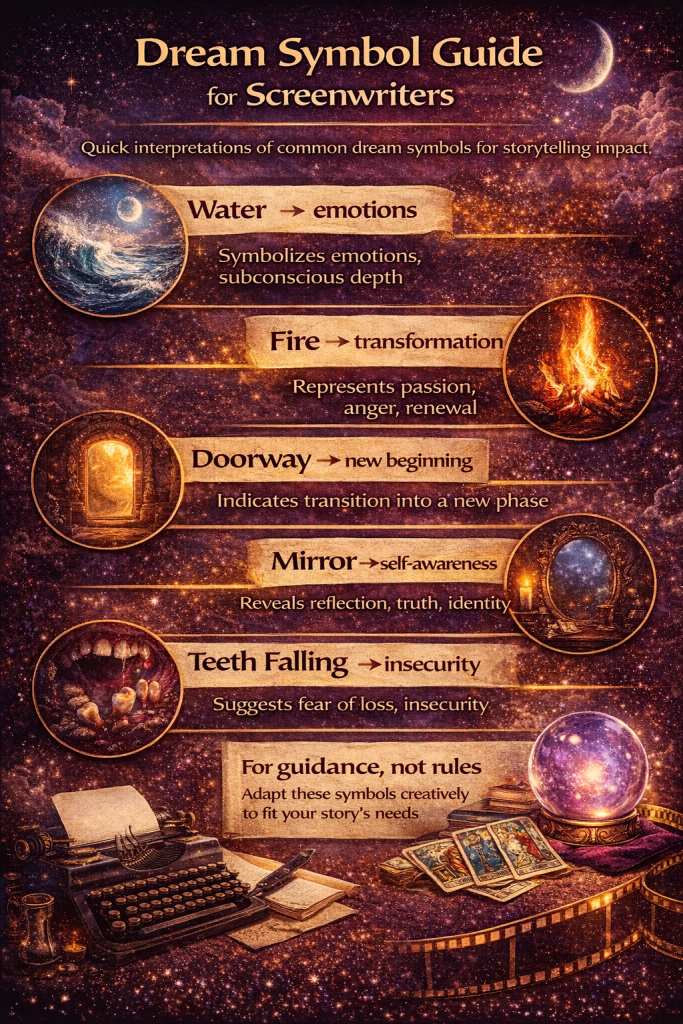
- Where a falling dream can mean you’ve lost control.
- Water can mean emotional pain or transformation.
- Mirrors mean identity.
- Doors mean choice.
- Shadows show conflict that hasn’t been resolved.
According to the American Psychological Association, they say that dreams help people to work through things like stress, fears, and hardships in life that might be hard to talk about consciously. Those who are screenwriters use this as a way to bring emotional truth to the viewers.
When people see a character that is dreaming of falling, being chased, drowning, or other things, they don’t need to have a conversation to understand the emotions that the character is feeling. The meaning can be felt and doesn’t have to be explained.
Dreams and Emotional Honesty
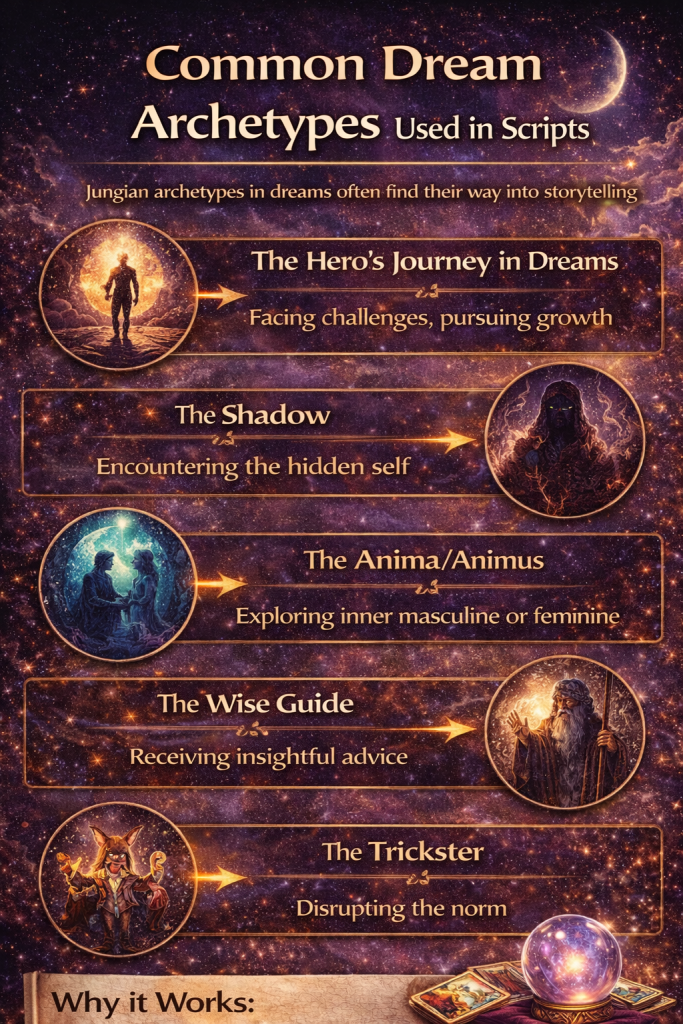
Dreams give people a safe place to use symbolic language for hard themes or things that are too hard to express. If the character is grieving over something, they might dream of a house that’s empty. If they’re falling in love with someone, they might dream of warmth or light. If they feel trapped, the dream might be in a maze, or somewhere they can’t get out.
These symbols create emotional immediacy without any type of melodrama. Dreams allow writers to:
- Look at trauma.
- Show how emotional tension comes.
- Look at suppressed memories.
- Show a character’s unconscious truth.
Instead of the filmmaker having to tell the viewers what they should feel, the dream imagery can come to them in a type of poetry.
How Dreams Show Emotional Processing
According to Harvard Medical School, they say that dreams can take emotional memory and help people to process it without fear, stress, or unresolved experiences. When a person watches a dream in a movie, they see this as an inner process, and it shows how their own mind and body work.
These dreams can make emotional accuracy one of the ways that people can relate to the characters.
Dreams Help People Feel Instead of Thinking
Dream scenes in movies help people feel what a character is going through. Viewers follow the emotion, not a logic puzzle. The meaning comes from mood and imagery. It feels like we are watching the character’s subconscious, and we understand them in a deeper way.
Audiences Want Symbolism
Many people today are interested in inner growth and personal meaning. The Pew Research Center shows that more people now describe themselves as spiritual rather than religious. Because of this shift, symbolism in movies feels relatable. Dream scenes match how people talk about energy, alignment, and vibe in everyday life. They let viewers creatively explore emotions and identity.
Premonitions and Intuition Combined
Premonitions in movies connect with something people experience in real life. When a character “just knows” something is about to happen, most viewers understand that feeling instantly. It connects to intuition, which is the quiet sense that something is right or wrong.
Why Premonition Is Common in Movies
Premonitions are no longer limited to scary or supernatural movies. Writers now include them in dramas, action stories, and emotional journeys. This trend fits with growing interest in intuition and symbolic thinking. People enjoy seeing characters use their inner signals to move through challenges, because that’s what they do in their own lives.
Premonitions as Emotional Signals
These moments often show a character’s hidden fear or hope before it appears on the outside. They add a sense of direction. They work like emotional hints that guide the story and prepare the audience for what is coming.
The Psychology Behind It
Cleveland Clinic notes that intuition comes from the brain noticing patterns before the person is fully aware of them. That means sudden feelings or quick decisions can come from real emotional information. When movies show premonitions, it looks like psychic power, but it is really a familiar human experience because it’s a reaction to what the mind already understands inside.
Premonitions and Mysticism
Screenwriting today doesn’t need to explain a premonition scientifically or mystically; the dream is the point. Premonition sequences allow the story to give out the idea of destiny, synchronicities, or even energy without saying that something is supernatural.
By doing this, it allows viewers to interpret life symbolically and to feel grounded for those viewers who want to see things from a psychological perspective. It also doesn’t push mysticism or tension on people but allows them to make their own thoughts and choices.
Premonitions let the writers invite intuition into the movie without requiring the audience to believe something specific.
Screenwriters and Dream Logic
When people see dreams and premonitions on the movie screen, they might seem mystical, but the power lies in how well they’re crafted. Writers today are able to use dream logic not just for aesthetics but to help bring emotional structure, create character development, and deepen the thematic push. These times are not done by accident, but they’re carefully placed narrative tools that help make the story have symbolic and emotional layers.
Getting Out of Chronological Storytelling
Dreams help screenwriters to get out of chronological storytelling because a dream can go between the past, present, and future in just a few seconds. This allows creative freedom. Writers will use dream sequences to:
- Show trauma without acting it out.
- Bring up emotional history.
- Show what a character is feeling, like fear.
- Explore other realities and identities.
- Reflect on psychological disorientation in fragmented time.
Instead of showing trauma, the writer can show a character who is trapped in a hallway that has doors that are constantly closing. This doesn’t have to be a flashback, but it can be an experience.
Emotional Echoes
Many modern movies use a technique called an “emotional echo.” This happens when a dream or vision appears early in the story and later returns with a deeper meaning. For example, a child might dream of a dark forest and then feel the same feelings when facing emotional problems. A character can dream about water getting higher and then later go through emotions that make them feel like they’re drowning. Someone might dream of losing their voice and then have a hard time speaking when they really need to. This shows how the audience is able to connect to their own inner world and the story. These movies bring a satisfying feeling, and recognition clicks in the moment.
Symbolic Anchors and Feelings
Dreams in movies often focus on a single strong symbol that appears again and again. It could be a red door that represents a life-changing choice waiting to be made. It could be a broken mirror that shows a character struggling with identity. It might be a shadowy figure that reflects hidden guilt or longing. Even entire landscapes can shift to show emotional change. These symbols give writers a simple way to express complicated feelings. Viewers don’t need a character to explain what’s happening when the symbolism speaks for itself.
Visual Contrast and Mood Shifts and Reflection
Dreams let directors change the look and feel of a movie to reflect a character’s emotional state. The colors might shift from warm and safe to cold and frightening. The sound may warp or fade. Time may stretch or speed up. A hallway can suddenly become an endless tunnel, or a familiar room can melt into a surreal world. These shifts show that something inside the character has changed. Instead of using heavy dialogue, the movie lets the audience feel the transformation happening.
Dreams and Subconscious Conflicts
Writers avoid things that are cliché when it comes to dreams, and they use dream logic to make sure that people understand the contradictions that are happening inside the character. The dream might show:
- Conflict between desire and duty.
- Guilt that is hidden by confidence.
- A pull between old identity and new self.
- Fear that looks like ambition.
Psychologists have seen that dreams can show unresolved emotional tension between people, and according to the American Psychological Association, dreams help process complex emotions and stress. Writers use this as a psychological truth and then turn it into dream symbols.
Using Mysticism in Movies
In modern movies, dream sequences don’t explain themselves, and there’s no character that wakes up gasping for air, and a metaphor that interprets the symbols. This isn’t just about clarity but residence. Writers choose:
- Sensory.
- Intuition.
- Ambiguity.
- Symbolic themes.
- Emotional Truth.
This allows dreams to stay mysterious, and this is something that the audience is able to feel instead of trying to interpret.
Psychics and Storytelling
Screenwriting today doesn’t use literal prophecy as much as it used to. But it mirrors how people talk about psychic experiences: symbols, intuition, energy shifts, and emotional foresight. This is why dream sequences and premonitions can resonate so strongly with newer audiences. They show things that are hard to explain, subtle, and things that many people have experienced in their real lives.
Not About Proving the Supernatural But Making People Think
Writers aren’t trying to prove psychic powers exist. They want audiences to feel what intuition is like. Gut feelings, déjà vu, sudden clarity, and movies recreate those inner moments on screen. The result feels spiritual without saying anything supernatural.
Intuition as a Force
Intuitive moments guide characters toward their emotional truth. A dream or sudden insight doesn’t show the future, but it shows what the character is avoiding or hoping for. That small nudge gives the audience a clue about their next step.
In “Dune,” Paul’s visions show fear and pressure. In “Stranger Things,” Eleven’s visions reflect trauma. In “Everything Everywhere All at Once,” visions show confusion and desire. These scenes focus more on feelings than facts.
Why This Connects with People
Life feels uncertain for many people. When the world is overwhelming, people look for signs and meaning. Pew Research Center reports more Americans now call themselves spiritual instead of religious. So intuitive storytelling feels relatable.
People enjoy stories that trust their instincts and emotions. They want something that speaks to their inner world.
Blending Psychology and Spirituality
Movies today mix emotional truth with symbolic imagery. A dream can be a trauma reaction and still feel like a message. A premonition can come from noticing patterns before the mind catches up. Both ideas work together.
Viewers can choose the meaning that fits their own beliefs. That flexibility makes the story feel personal.
Why Writers Use This Style
It helps show what characters feel without long speeches. It adds mystery but keeps the story real. It matches how people talk now by using words like energy, vibe, and alignment.
It isn’t about magic. It’s about emotion leading the way.
Final Thoughts: Dream and Premonitions
In movies today, dreams and premonitions work because they speak a language that’s important to the human psyche. They change emotion into imagery and intuition into symbolism. This allows inner conflict to sound more like cinematic poetry instead of trauma. These movies resonate with people because they show how people actually experience things like change, fear, and a longing for insight.
By adding surrealism, mysticism, and psychology, screenwriters today can create stories that feel emotionally honest and familiar. People who have been in a place of spirituality and rely on their intuition see that these things are normalized and that dream sequences aren’t strange, but they feel like the truth.